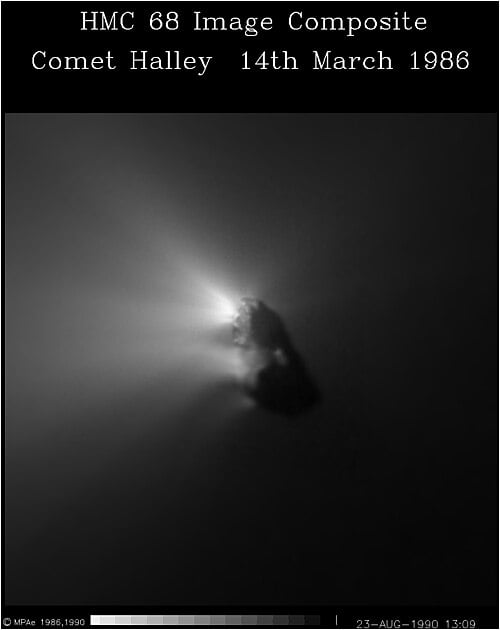
There is a peculiar nostalgia attached to the sight of a comet, an ancient wanderer that bridges the gap between the mythological and the mechanical. When Halley's comet last graced our skies in 1986, I was merely a toddler, but for the scientists of that era, it was a moment of intense, almost frantic activity. We unleashed what became known as the "Halley Armada," a fleet of spacecraft from different nations racing to capture a glimpse of the icy giant before it vanished into the glare of the sun. Yet, as we now know with regret, our technology in those days was limited by the very nature of the comet's path. The spacecraft could only skim its surface for a fleeting few hours, unable to linger in the shadow of its nucleus or observe the changes that occur over weeks and months.
The desire to revisit this celestial traveler is not merely about capturing better photographs; it is about understanding the dynamic process of comet evolution. Halley is unique in our solar system because it is the only long-period comet with a period shorter than a human lifetime, meaning it returns frequently enough to be observed by multiple generations. However, its trajectory is a narrow ribbon of opportunity. Any spacecraft attempting to rendezvous must match its speed and direction with incredible precision, a feat that leaves little room for error. For decades, planetary scientists have yearned for a mission that could slow down, hang around, and study the comet's coma and tail in real-time, observing how it sheds its dust and ice as it approaches perihelion.
Comments
Post a Comment