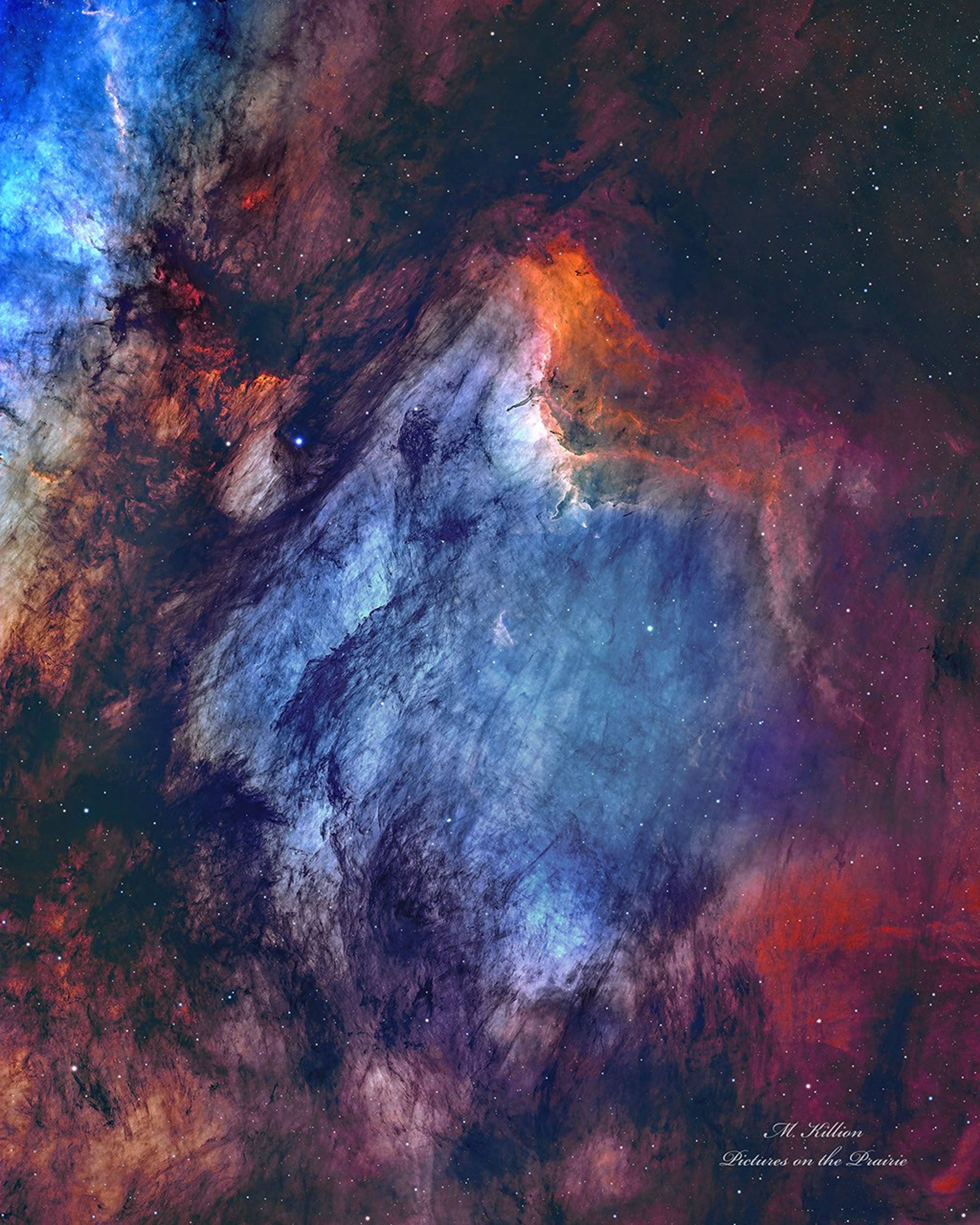
There are places in the universe where the chaos of creation is so intense that it looks like a storm trapped in space, and the Pelican Nebula is one of the most striking examples we have. Located just over ten thousand light-years away in the constellation Cygnus, this stellar nursery is a swirling masterpiece of gas and dust where newborn stars are just beginning to punch through their protective cocoons. The name itself, derived from its resemblance to a wading bird with a long beak and outstretched wings, serves as a poetic reminder that the cosmos often hides familiar shapes within its vast, alien expanse.
What makes this nebula particularly fascinating is the dynamic interplay between the stars forming within it and the stellar giants already present. At the heart of the structure lies the open star cluster Melotte 16, home to several massive, luminous stars known as O-type and B-type stars. These cosmic beacons burn with such ferocity that they emit intense ultraviolet radiation, carving out a hollow bubble in the surrounding molecular cloud. This process, known as photoevaporation, is the universe's way of sculpting the chaotic raw material of hydrogen and helium into the structured environments where life might eventually find a foothold.
Comments
Post a Comment