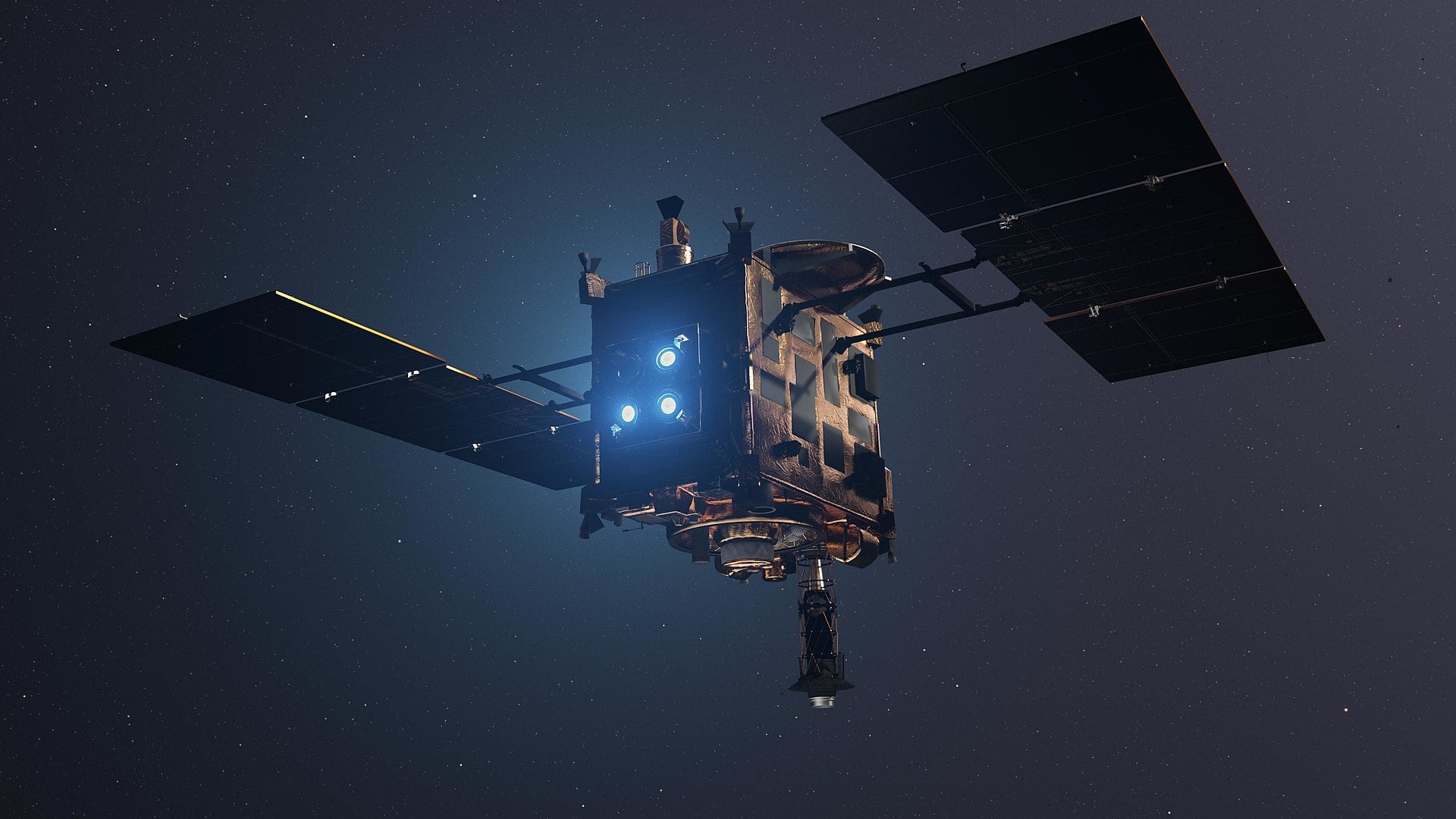
On a quiet Sunday in late July 2026, the silence of deep space was broken by a flash of light that would have gone unnoticed by any human eye but for a team of engineers watching from Earth. The Japan Aerospace Exploration Agency's Hayabusa2 probe, long celebrated for its daring sample-return mission to the asteroid Ryugu, had turned its attention to a new challenge: measuring the distance to the rock with laser precision. It was the first time in history that an interplanetary probe had successfully performed laser ranging while flying past an asteroid, a feat that transforms our ability to track these celestial wanderers with terrifying accuracy.
For decades, astronomers have relied on radar to measure the orbits of near-Earth objects, but those methods have limits, especially when it comes to small, irregularly shaped asteroids that pose potential risks to our planet. The Hayabusa2 team, realizing that a laser could provide a much sharper measurement of the asteroid's size, shape, and rotation rate, decided to take the risk. They fired a laser pulse from the spacecraft toward the surface of Ryugu, timing the return of the photons with nanosecond precision. When the signal bounced back, it confirmed not just the distance, but the roughness of the surface, data that was previously impossible to gather from this vantage point.
Comments
Post a Comment