On this day in space! Sept. 6, 1947: The US Navy launches 1st V-2 rocket at sea in ballistic missile test
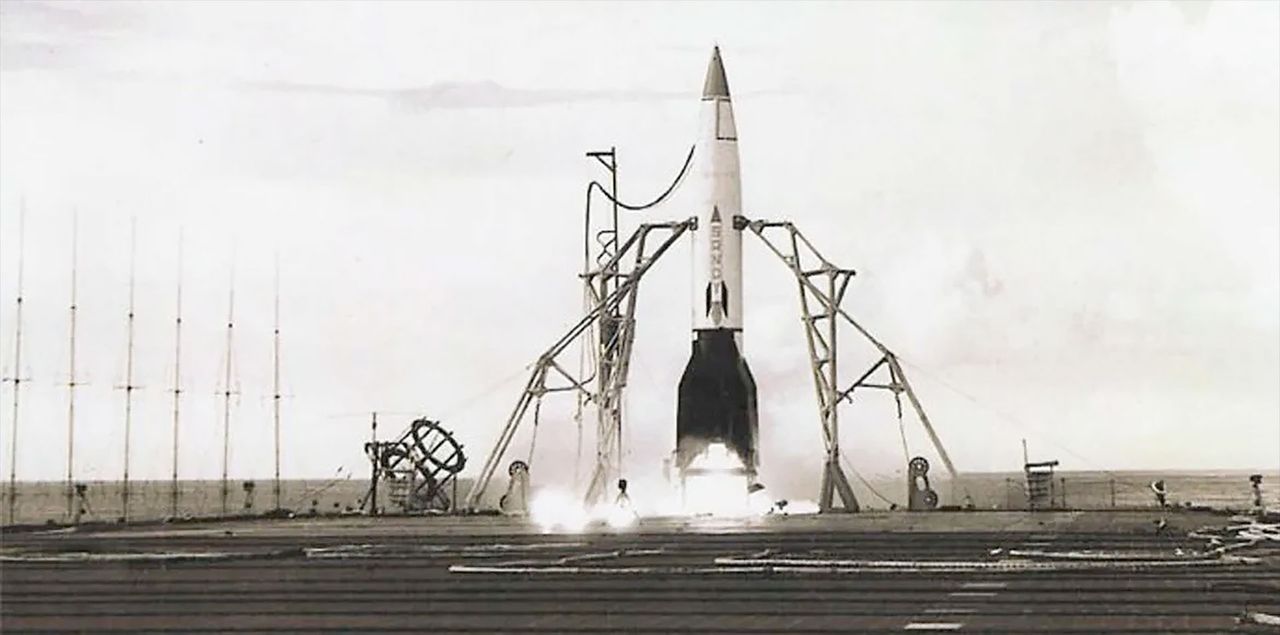
On September 6, 1947, the Atlantic Ocean became the stage for a moment that would fundamentally alter the trajectory of human history, not because of the roar of engines or the flash of explosions, but because of where the launch took place. For decades, humanity had looked up at the heavens, dreaming of reaching them from the solid, unyielding ground. Yet, on this specific day, the United States Navy turned the U.S.S. Langley into a moving platform, firing a captured German V-2 rocket from the deck of an aircraft carrier. This was not merely a test of propulsion; it was a proof of concept that validated the most radical idea in orbital mechanics: that a rocket did not need to stand on the Earth to fly toward it.
The context of this event is steeped in the shadow of World War II and the frantic scramble of the early Cold War. The V-2, originally designed by Wernher von Braun and his team in Germany, was the first guided ballistic missile to reach space, achieving an altitude of over 80 miles in its 1942 debut. After the war, the United States secured the team and the technology, seeing immense strategic value in a weapon that could bypass anti-aircraft defenses and deliver payloads across oceans. However, the Navy realized something even more profound: if a rocket could launch from a ship, it could theoretically launch anywhere the ship could go. This shifted the paradigm from fixed silos to mobile platforms, effectively turning the entire coastline and the high seas into potential launch corridors.
Comments
Post a Comment