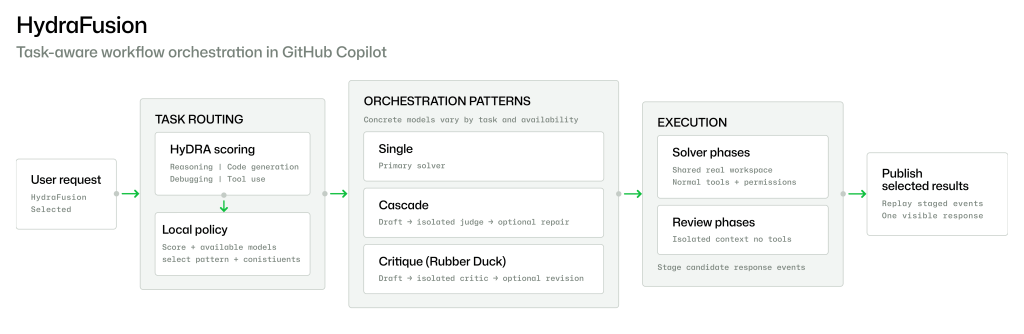
There is a persistent myth in software engineering that the single most powerful model is the only path to production-grade code. We have spent years racing toward ever-larger parameters, convinced that scaling raw intelligence is the solution to our productivity bottlenecks. But what if the answer lies not in building a bigger brain, but in orchestrating a smarter team? The release of Project HydraFusion challenges this singular focus, introducing a multi-model orchestration approach that prioritizes context and efficiency over brute-force computation.
In the high-stakes arena of code generation, the gap between experimental prototypes and reliable engineering tools has always been wide. We saw this clearly when the latest baseline models, like Opus 5, dominated controlled offline evaluations. They were impressive, undeniably capable, yet they carried a hidden tax: the estimated cost of running such massive models for every line of code is prohibitive for large-scale development workflows. This creates a paradox where the best tool is often too expensive to use consistently, leaving teams to toggle between quality and budget.
Comments
Post a Comment