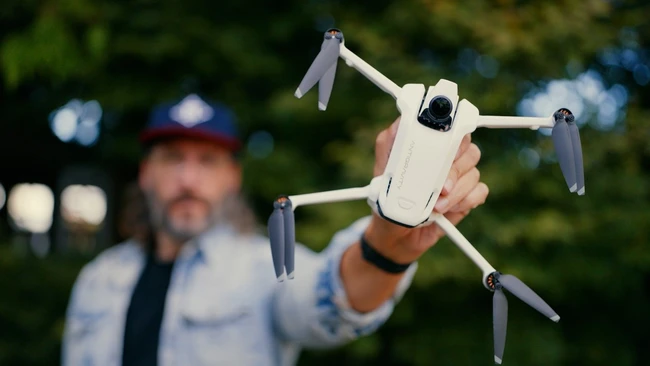
There is a profound, almost meditative state in flying a drone where the pilot is no longer wrestling with the vehicle to keep it upright, but is instead guiding it with the same fluidity one might use to steer a car or a bicycle. This shift happens when the camera and the flight path are perfectly synchronized, a concept realized in the Antigra by attaching a 360-degree camera directly to a 249-gram frame. For years, the industry has been obsessed with gimbal stabilization, treating the camera as a separate, heavy entity that requires constant counter-movement. The result is often a pilot who is hyper-aware of their own controls, fighting the wind and the weight of the sensor simultaneously. The Antigra changes the equation by making the camera the center of gravity, not an appendage fighting against it.
When you bolt a 360 unit to a lightweight drone, the physics of the flight change dramatically. The pilot stops fighting the camera because the camera is the drone. This single shift allows for a level of intuitive movement previously impossible in consumer aviation. You are no longer compensating for roll, pitch, and yaw; you are simply moving the object that captures the image. It feels less like piloting an aircraft and more like walking through a landscape, with the world unfolding around you in real-time. This is particularly liberating for creative pilots who have been held back by the technical hurdle of stabilizing shots while navigating complex terrain. The barrier to entry for high-quality, dynamic footage drops precipitously because the machine itself does the heavy lifting of stabilization.
Comments
Post a Comment