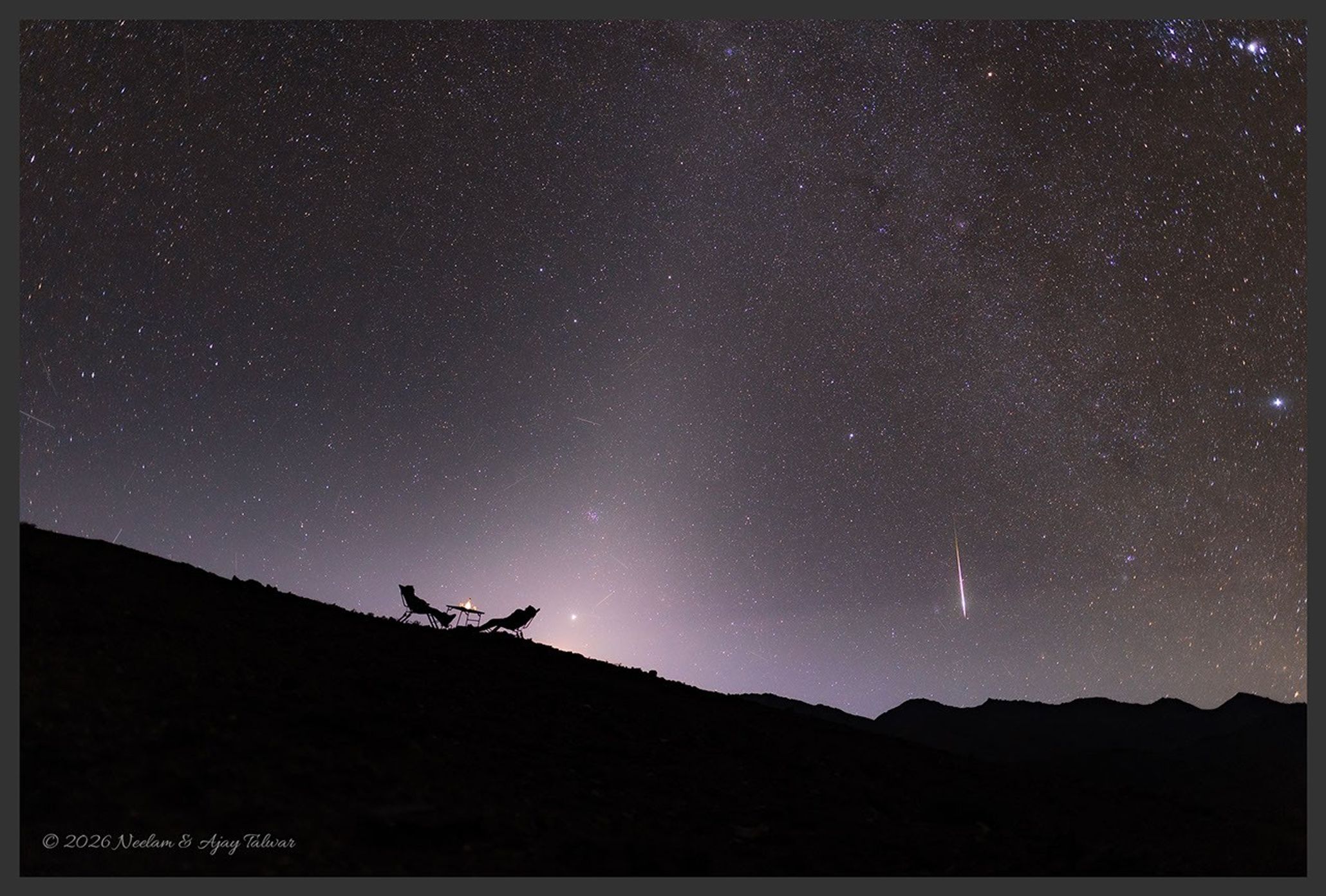
We often look up at the night sky expecting to see distinct points of light or streaks of fire, yet the true canvas of the universe is frequently washed in a soft, silent glow that is invisible to the unaided eye. This September night, the sky offered not a star, but a subtle luminous tapestry known as the zodiacal light, a phenomenon that reminds us how crowded our solar neighborhood really is. It is a ghostly cone of dawn light that stretches from the horizon toward the zenith, a visual testament to the sheer volume of dust that surrounds us, lingering from the debris of our own formation.
This ethereal glow is not the light of stars or distant galaxies, but the reflection of the Sun dancing off a vast cloud of interplanetary dust grains. These tiny particles, ranging from the size of a grain of sand to a speck of dust, orbit the Sun within the ecliptic plane, the same flat disk where the planets wander. As sunlight strikes them, it is scattered back into space, creating a faint, milky pillar that is most visible when the sky is perfectly dark and the observer has the patience to stare. It is a quiet spectacle, requiring no telescope, yet demanding a darkness and a horizon unobstructed by city lights or mountains.
Comments
Post a Comment