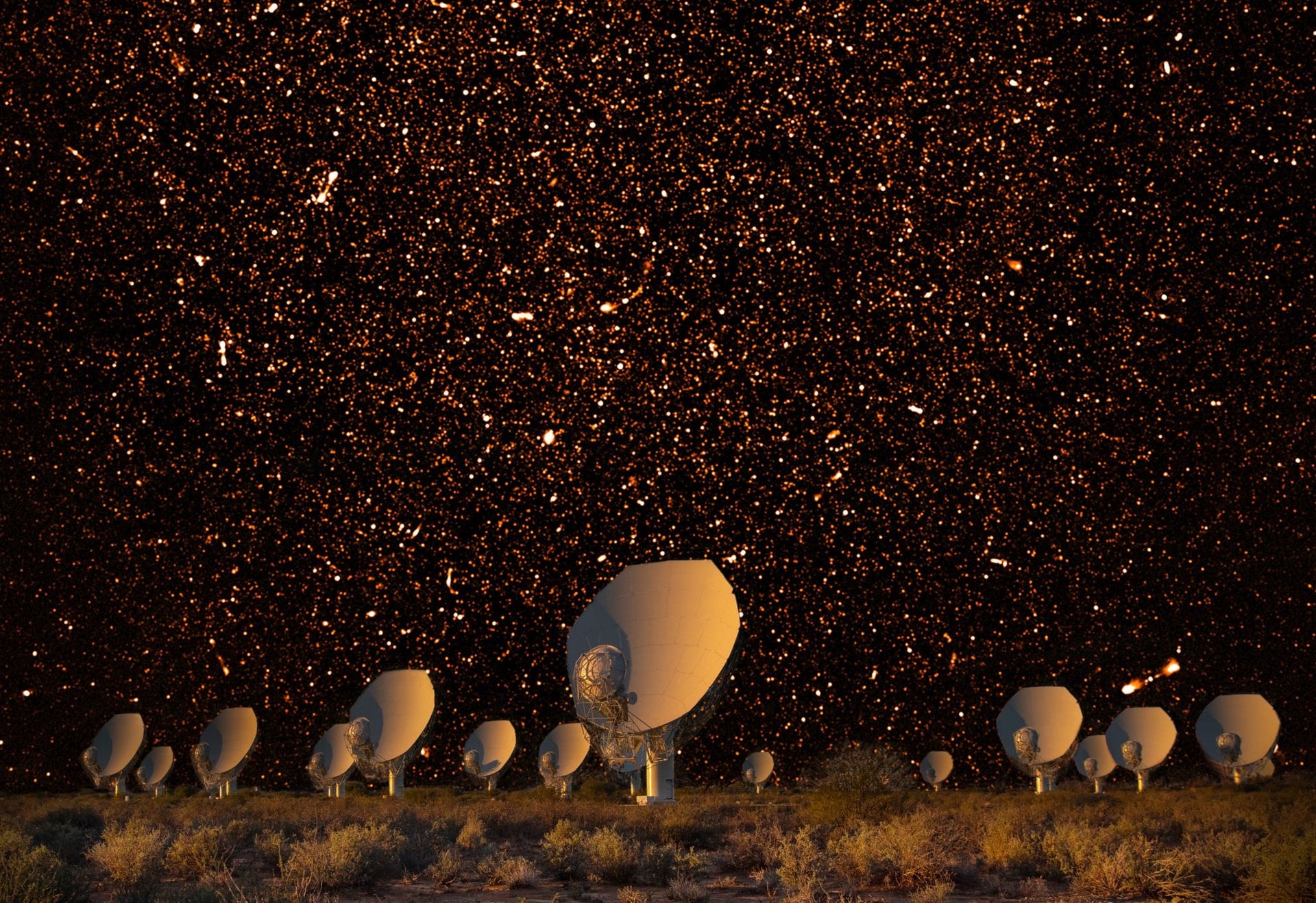
For decades, astronomers have chased the echoes of the early universe, listening for the ghostly afterglow of the Big Bang. Yet, for all our technological triumphs, we have remained blind to the vast, neutral hydrogen clouds that filled the cosmos billions of years ago. These clouds were the silent architects of the stars we see today, but their radio whispers were too faint, too diffuse to pierce the noise of our modern world until now. A new breakthrough finally allows us to hear them directly, turning a deafening void into a detailed map of cosmic history.
This achievement is not merely a matter of building a bigger telescope; it is a fundamental shift in how we perceive the fabric of reality. By detecting the specific radio signal emitted by neutral hydrogen, researchers have effectively lit a lighthouse in a dark ocean. This signal, known as the 21-centimeter line, is a universal constant that has been drifting through space since the universe was less than a billion years old. Capturing it required overcoming the overwhelming static of our own planet and the interference of radio waves generated by human activity and the cosmos itself.
Comments
Post a Comment