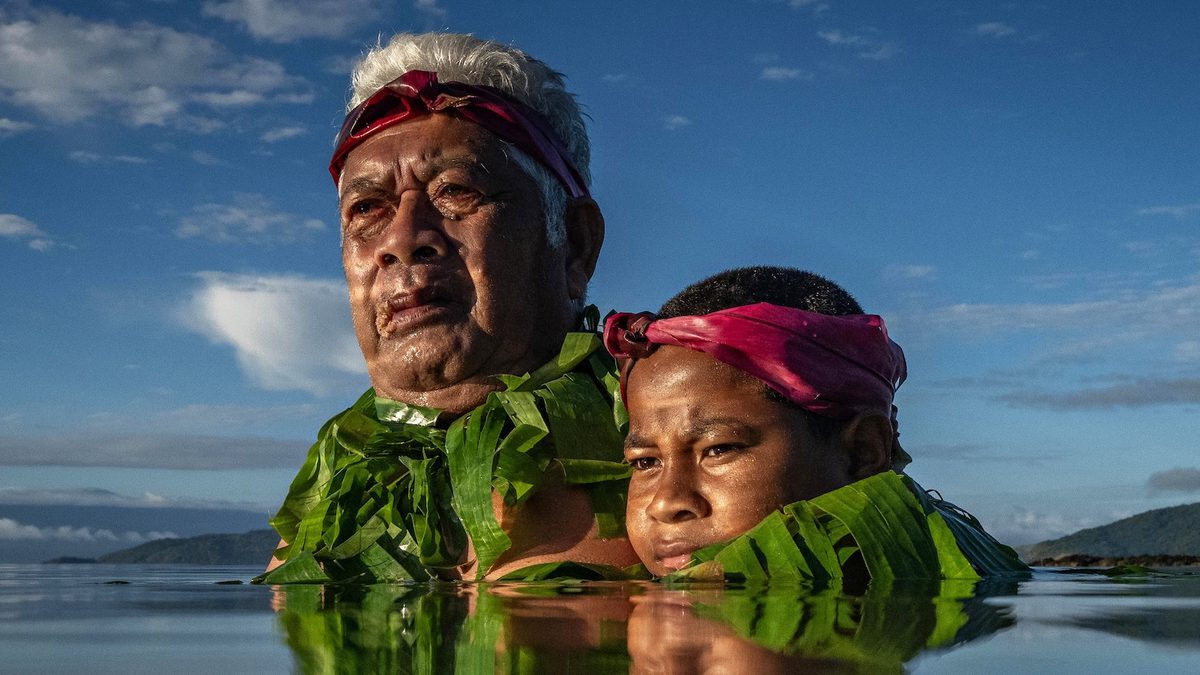
When the International Court of Justice ruled in the Pacific Islands Forum's case against Australia, the headlines focused on carbon budgets and legal precedents for sovereign survival. Yet, buried within the dense legal briefs and judicial deliberations was a more profound, perhaps more human, argument that reshaped how the world understands climate harm. Julian Aguon, a human rights lawyer who has dedicated his career to the defense of Indigenous peoples, did not merely argue for the preservation of land; he argued for the preservation of the very soul of a culture that has existed for millennia. His victory was not just a diplomatic win for small island nations, but a critical moment for recognizing that climate change is an act of cultural erasure as much as it is an environmental catastrophe.
Aguon's work forces us to confront a reality that Western legal systems have long struggled to articulate: the difference between the destruction of a physical object and the destruction of a people's way of life. For Indigenous communities in the Pacific, the land is not a resource to be managed or a territory to be defended; it is the library, the church, and the family home combined. When rising seas swallow ancestral villages, it is not simply a loss of real estate; it is the burning of a living archive. The specific songs, navigation routes, and oral histories tied to particular peaks and atolls vanish with the water, taking with them the collective memory that defines the community's identity. This is the core of Aguon's argument—a legal framework that acknowledges that without a physical home, the cultural continuity necessary for survival is impossible.
Comments
Post a Comment