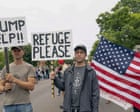
When the announcement rippled through the corridors of the American diplomatic community in early 2025, it was met not with the usual skepticism reserved for geopolitical maneuvering, but with a mixture of relief and vindication among a specific demographic in Pretoria. Donald Trump's declaration that the United States would accept Afrikaners as refugees was framed as a moral imperative, a direct response to what was labeled a "white genocide" in South Africa. For many, this was the long-awaited validation of a narrative that had been simmering in the shadows of their lives for decades—a belief that their culture was being systematically erased and that their very existence as a people was under existential threat.
However, the machinery of the United Nations High Commissioner for Refugees (UNHCR) and the US State Department operates on a set of rigid, often unforgiving criteria that have little to do with political rhetoric or public sentiment. The concept of "genocide" in international law requires proof of specific intent to destroy, in whole or in part, a national, ethnical, racial or religious group. While the rhetoric of dehumanization has unfortunately entered the lexicon of South African politics, the legal threshold for refugee status remains incredibly high. Applicants from South Africa were required to demonstrate a well-founded fear of persecution that could not be mitigated by internal relocation, a standard that dozens have now failed to meet in the eyes of US adjudicators.
Comments
Post a Comment