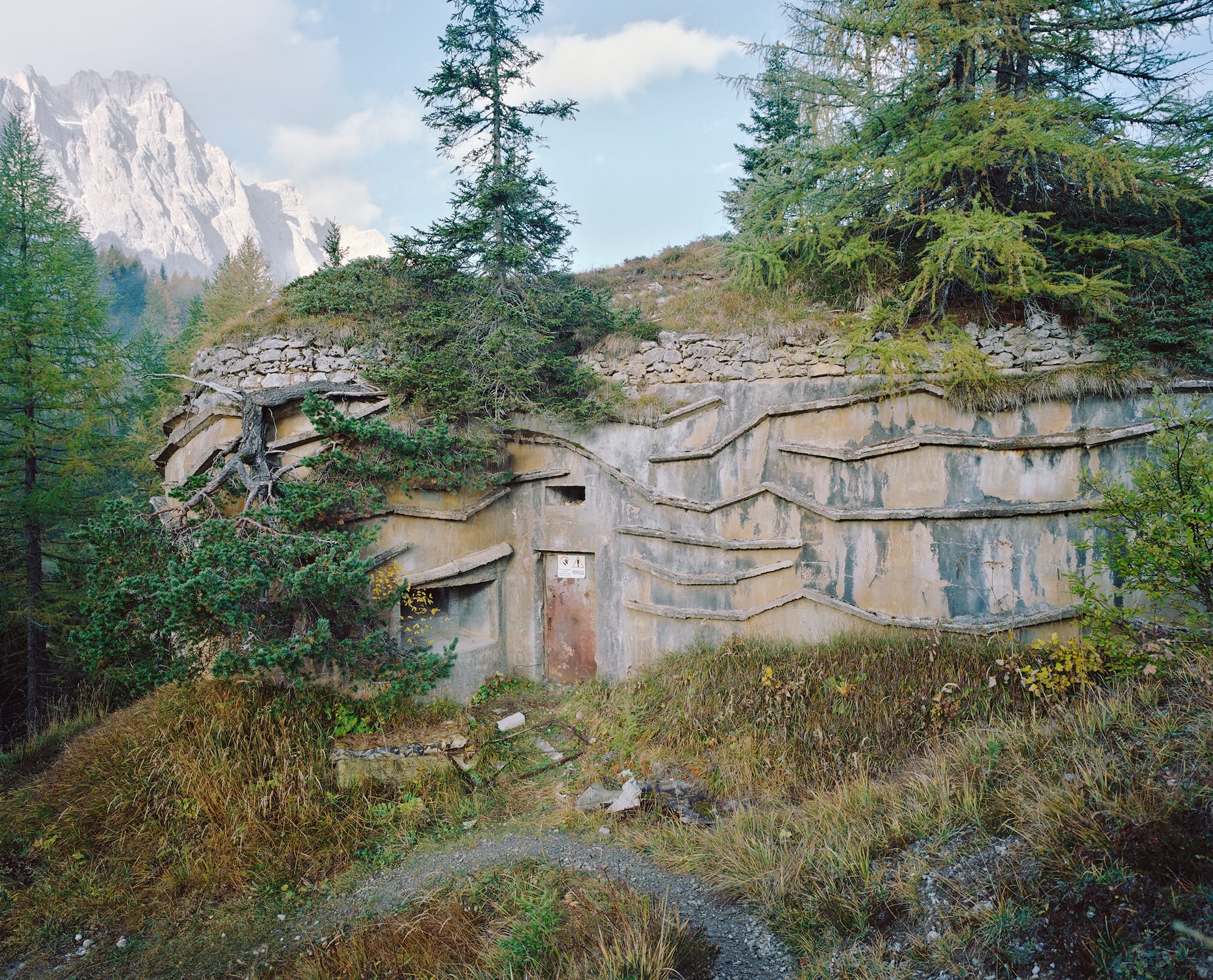
High in the jagged crags of South Tyrol, where the air is thin and the granite scars of glacial retreat still dominate the landscape, a hidden chapter of history waits to be read in stone. Vincenzo Pagliuca, a photographer with an eye for the structural poetry of abandonment, has turned his lens toward the brutalist remnants of World War II. These are not merely fortified positions; they are frozen moments of human desperation, built in a race against time by soldiers who imagined a future that never came. Pagliuca's work does more than document ruins; it interrogates the relationship between the land and the violence imposed upon it, revealing how nature slowly reclaims the architectural arrogance of war.
The bunkers scattered across these Italian Alps were part of a desperate defensive line constructed in the late 1930s and early 1940s. Built with a mix of concrete and local stone, they were designed to withstand artillery fire and hold the line against advancing forces. Yet, the passage of eight decades has transformed their function. The machine guns are gone, the barbed wire has rusted into silent ornaments, and the interiors, once echoing with the frantic shouts of command, now hold the quiet weight of snow and silence. Pagliuca captures this transition with a clinical precision that highlights the stark contrast between the organic flow of the mountain and the rigid, geometric imposition of military engineering.
Comments
Post a Comment