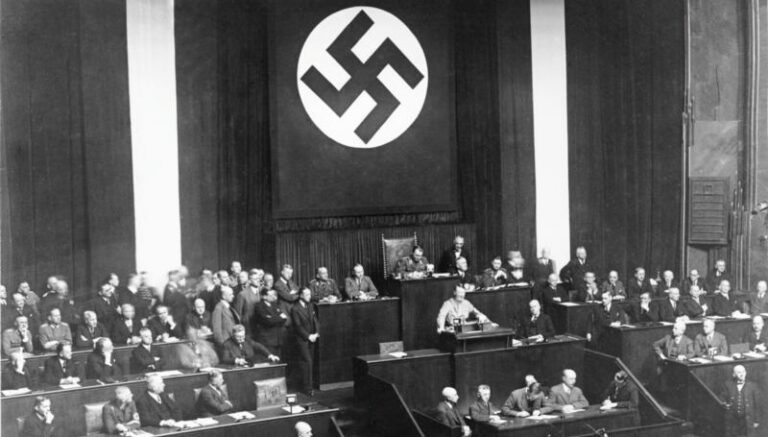
In the early hours of March 5, 1933, a nation stood on the precipice of its own self-destruction, unaware that the hammer falling would be forged from within. The Weimar Republic, already battered by hyperinflation and the ghosts of the Great War, faced an election that did not merely change the government but systematically dismantled the very concept of liberal democracy. While the world watched in stunned silence, Adolf Hitler and the Nazi Party leveraged the chaos of the election not to seize power through traditional means, but to dismantle the legal framework that protected them from tyranny in the first place.
The narrative of this day is often reduced to a single statistic: the Nazi election victory. In reality, the day marks the moment the Reichstag, Germany's parliament, was deliberately set ablaze by a communist arsonist. This act of violence was instantly weaponized by the Nazis as proof of a vast, left-wing conspiracy, a narrative designed to justify the suspension of civil liberties. Within hours, the emergency decrees issued by President Paul von Hindenburg stripped citizens of their right to privacy, freedom of speech, and the right to assemble, effectively creating a legal vacuum where the rule of law was replaced by the rule of fear.
Comments
Post a Comment